


Young children rarely walk into a room and explain what is bothering them. They show it: in a meltdown that is out of proportion, in a stomachache every school morning, in play that keeps returning to the same scene. Play therapy works in that language instead of asking a child to translate their feelings into adult conversation.
Play therapy at our Frisco office is for children who are struggling with big feelings, behavior, a change in the family, or something frightening they have been through, and for the parents who are trying to help them.
Finding the right therapist for your child
Our Frisco team includes a Registered Play Therapist (RPT) trained in child-centered play therapy, and other Frisco clinicians use play, art and sand tray work with children, tweens and teens. Between them, their profiles describe work with children from as young as three.
When you call or email, tell us your child's age and a little about what you are seeing at home or at school. We will match you with a clinician who works with that age group and currently has openings. It is also reasonable to ask a prospective therapist about their play therapy training, how they will keep you informed, and how they decide when your child is ready to finish. You can read about the Frisco team first.
What parents often notice first
- Tantrums or anger that seem much bigger than the trigger
- Worry, clinginess or trouble separating at drop-off
- Trouble sleeping, or going back to behaviors they had outgrown
- Withdrawing from friends or activities they used to enjoy
- Struggling after a divorce, a move, a new sibling or a loss
- Changes after something frightening happened
What happens in the playroom
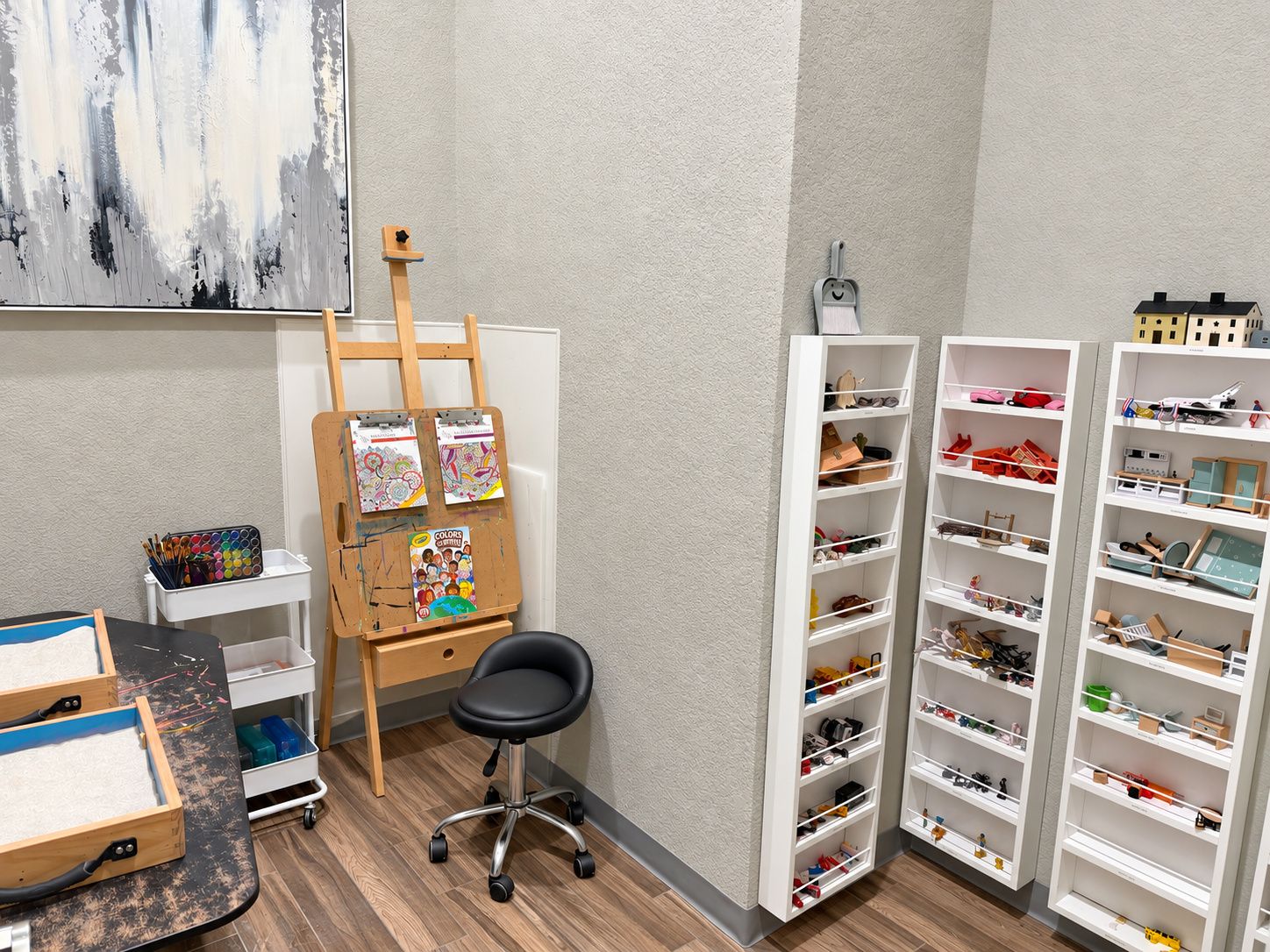
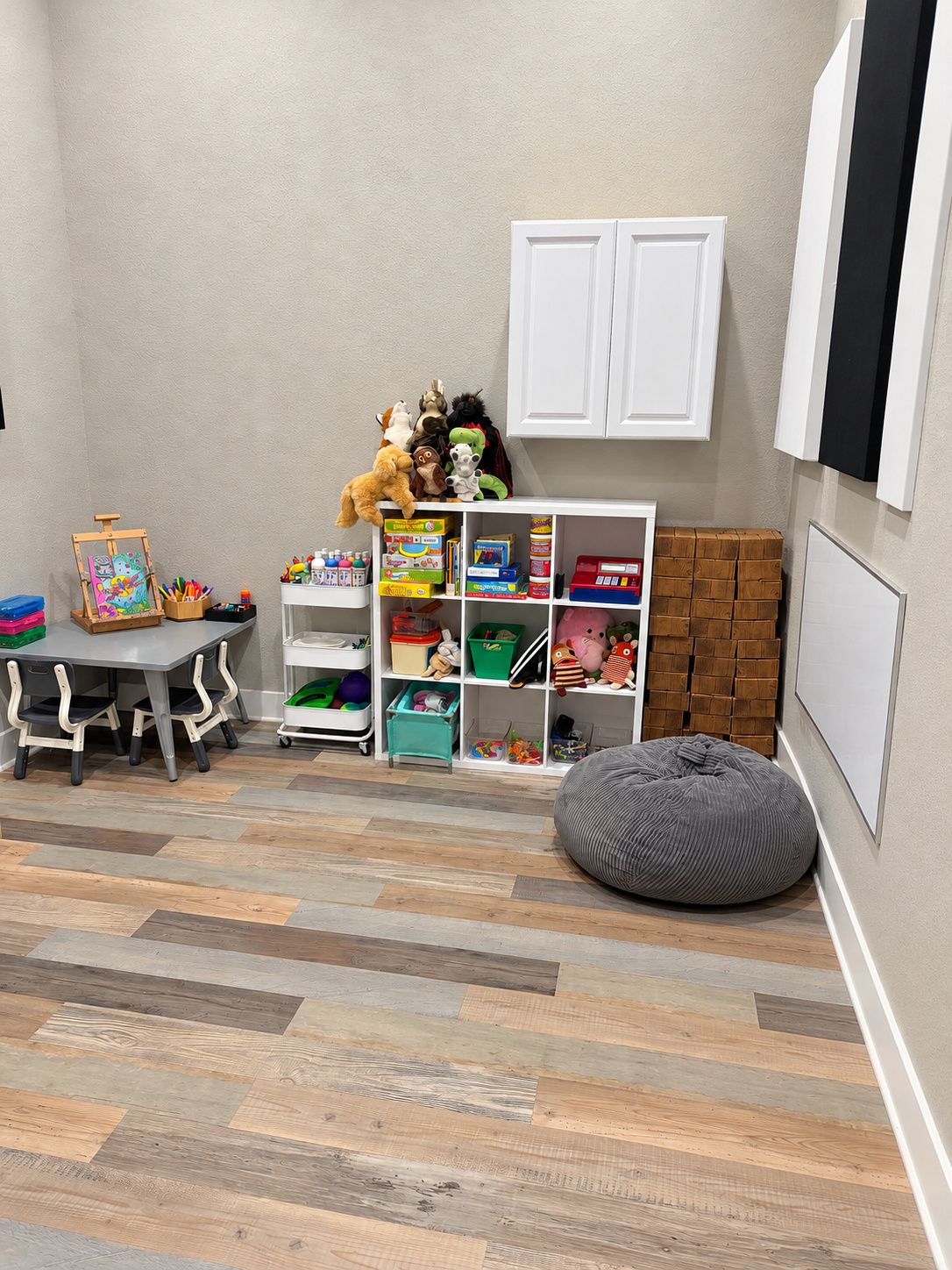
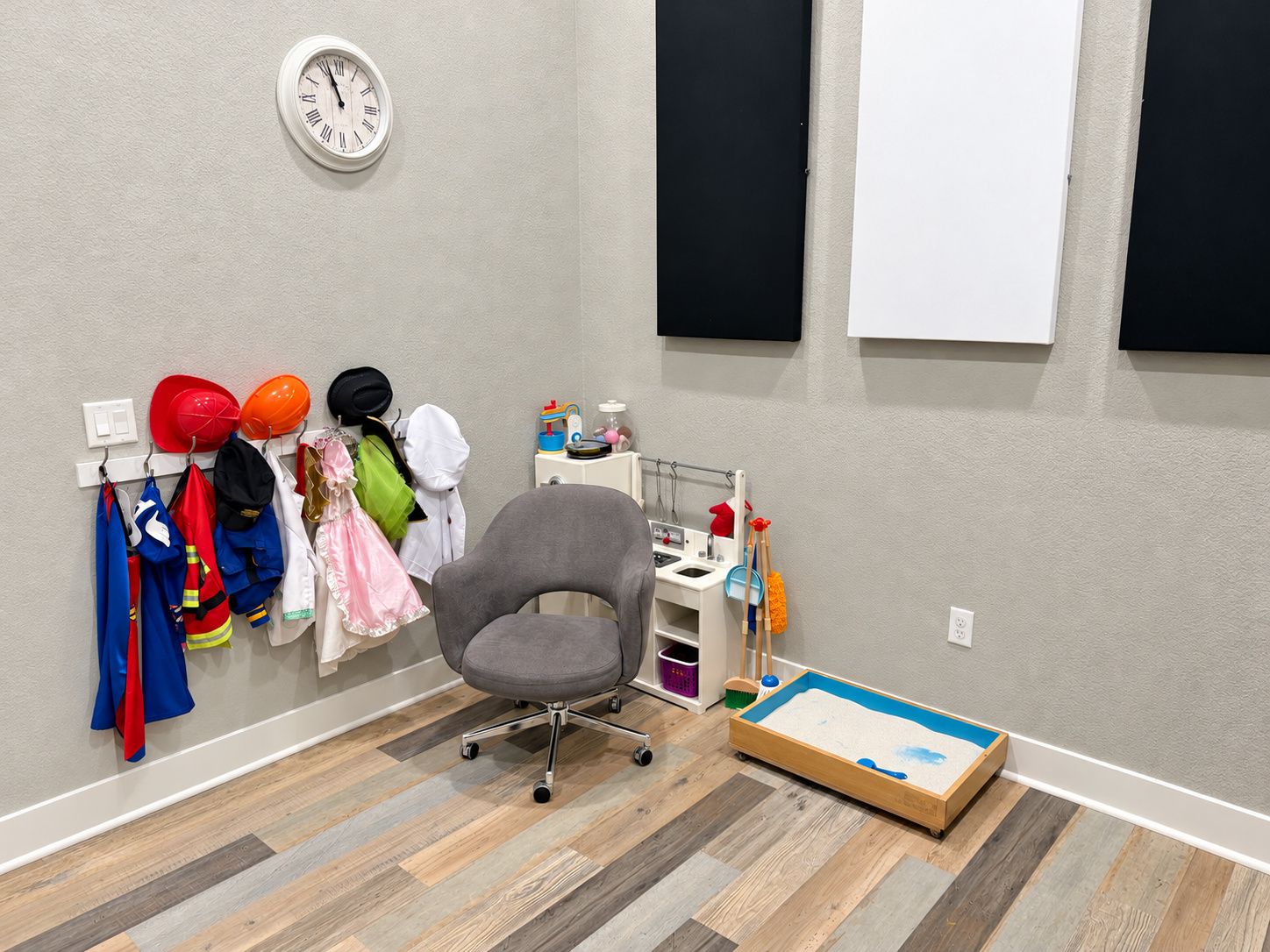
In child-centered play therapy, the child leads and the therapist follows closely, reflecting what the child is doing and feeling. Toys and art materials are chosen so children can act out what they cannot yet say. To an adult it can look like ordinary play; to the therapist it is where a child practises handling feelings, rehearses difficult situations and builds a sense of control.
You are part of this too. Ask your child's therapist how parent check-ins will work and what you can do at home between sessions. Our play therapy page explains more about the approach, and our parenting page covers support for the adults in the family.
Swipe to see more